
Last updated: Aug 06, 2026
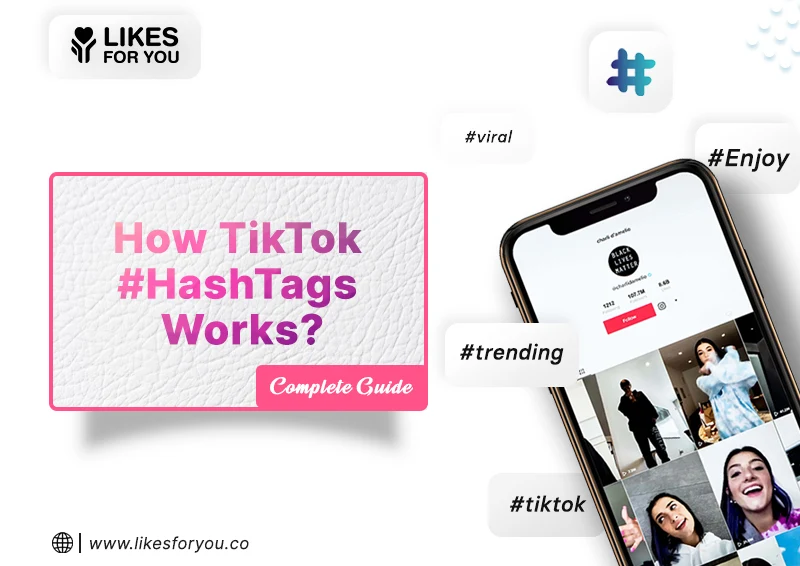
If you've heard that hashtags are dead on TikTok, you've only heard half the story. TikTok hashtags no longer force your video onto the For You Page the way they did a few years ago. But they haven't disappeared; they've changed jobs. Understanding how TikTok hashtags work in 2026 is the difference between wasting five tags on #fyp and actually using them to get discovered by the right audience.
This guide walks through what's changed, how the algorithm treats hashtags today, and how to build a TikTok hashtag strategy that reflects the way people actually use TikTok Search now, as a search engine, not only a scroll feed.
TikTok hashtags are mostly used to help people find videos and to categorize them.
They are not really used to make your video go viral or get a lot of views.
The algorithm looks at your video, including how you deliver content, what you write on the screen, and the hashtags you use.
If you are making a video on TikTok, you should use around three to five hashtags that actually relate to what your video is about.
If you use hashtags along with what people are actually searching for on TikTok and popular sounds and TikTok hashtags, your video is more likely to get found by people who are interested in your content.
TikTok hashtags are clickable keywords, marked with the # symbol, that creators attach to a video's caption to describe its topic. They help TikTok’s system sort content into clear categories, and they also help you find similar videos when you tap the hashtag page or use TikTok Search on purpose.
Honestly, a hashtag isn’t really a sentence, no matter how it sounds. It’s more like a tag people can look up. So when you use something like #BudgetMealPrep, it does a lot of work for you. It’s quicker to discover than if you just type “budget meal prep” somewhere in the middle of a longer sentence. The hashtag works like a button and guides both the computer and viewers, so everyone can quickly get an idea of what your video is about. In turn, your video gets linked to a larger crowd, those who care about, say, affordable cooking routines and similar stuff.
When you publish a video, TikTok doesn't just go by hashtags on their own. It most likely figures it out by itself. The TikTok algorithm watches your visuals, transcribes your audio, reads the text on-screen too, and then it checks your hashtags as well, all at once. After that, it uses the combined signal to line up your post with the viewers most likely to engage.
That’s why a hashtag working on its own is a rare thing. If your pictures, words, and sounds are all about one theme, but your hashtags point to a different idea, that mismatch makes it harder for people to understand what your post is about. The best way is to use hashtags as a support, basically to reinforce what the rest of the video is already showing, and maybe add a clear subject that’s not really obvious yet.
Yes, of course. But they don't work well at all, and honestly, they work even less now. The reason is that the most popular hashtags are used across hundreds of millions of videos that are not even connected, so using TikTok hashtags only is not as helpful as it used to be for getting noticed or pulled into views on TikTok.
TikTok SEO has taken the place of the old way of doing things. People are now using hashtags more like search terms instead of just ways to go viral. This is happening because more and more people are using TikTok's search function to find how-to guides, product reviews, and recommendations.
According to Adobe's 2026 consumer survey, nearly half of U.S. consumers (49%) have now used TikTok as a search engine, up from 41% just two years ago. That kind of jump is exactly why treating hashtags as search keywords works better than chasing viral tags. Creators who use hashtags like they're typing into a search bar get discovered much better over time than those who just jump on whatever tag is popular that week.
The algorithm uses hashtags to help figure out what your video is about. This is so TikTok can show your video to the right people. When you add a hashtag that makes sense for your video, it helps TikTok understand what your content is about. When you add a hashtag that actually matches what’s going on. So it’s more likely the right people will see your video.
But here’s the thing: what really drives getting featured on the FYP is what happens after that initial match: watch time, replays, shares, saves, and TikTok comments matter way more than the hashtag itself. Think of hashtags like addressing the envelope correctly. Then the engagement is what decides whether the message inside gets read and passed along.
Finding the best TikTok hashtags starts with thinking like a searcher, not a broadcaster. To be honest, this simple method helps you skip the generic hashtags that many creators use without really thinking about whether they help.
Then look at what’s already ranking. Type your core topic in the TikTok search bar, then look at the suggested completions. After you do that, check out the hashtags used in the best-performing videos in that result set. Those Creator Search Insights show real demand, and they also show the thin spots you can step into with more results.
Use this process before publishing any video:
1. Go into TikTok Search and look up your core topic, then watch the autocomplete suggestions roll in.
2. Open the top three ranking videos and jot down which hashtags they keep reusing, like the same 2-4 tags again and again.
3. Then for each candidate tag, check its hashtag page, make sure it’s active, and that the content shown is still relevant, not some random drift.
4. Pick one broad tag, then grab one or two niche tags, plus one search-intent tag that matches what someone is trying to find.
5. Now mirror that chosen keyword in your caption sentence and also in the on-screen text.
Sure, this takes a few extra minutes per video, but it swaps guesswork for real demand data pulled right from TikTok. And over time, if you track which tag combinations correlate with higher TikTok views and stronger completion rates, you can turn it into a repeatable system, not just a one-off factor.
Run through this before you hit post:
Treat this checklist as a habit rather than a one-time exercise. A quick pass before every upload catches the most common errors, irrelevant tags, overused generic ones, or a mismatch between the video and its labels, before they cost you reach.
Not meaningfully. Since tags like #FYP and similar ones get stuck onto, like, a massive share of all TikTok uploads, they basically tell the algorithm almost nothing specific about who should see your video or what it’s about. Sure, using them isn’t harmful, but it’s rarely worth spending one of your limited hashtag slots on them.
Most creators would be better off swapping that spot out for a more specific descriptive tag that ties to their exact niche. #WeeknightDinner will do a better job for a recipe video than #fyp ever could, simply because it’s a more narrow match, rather than tossing your content into an impossibly wide, undifferentiated bucket.
Your biggest mistake is copying your competitor’s exact list of hashtags, without editing. Your audience signals, posting history, and niche may not be the same as yours, so identical tags will not necessarily categorize your video the same way or reach the same TikTok followers.
Other common mistakes are using the same 5 tags for every upload, regardless of the subject, chasing the trending TikTok hashtags list at the expense of relevance, and cluttering captions with so many tags that the signal gets lost. They often appear to be reasonable shortcuts, but each of these quietly shrinks your reach instead of expanding it.
TikTok SEO is a broader thing where hashtags now sit. It's about the entire process, not just adding some tags. This includes using captions with relevant keywords, speaking keywords in your voiceover, and choosing on-screen text and audio carefully. Everything needs to work together so your video can be found in TikTok Search.
Hashtags are only one visible part of this system; they aren't the whole thing or a quick fix. Practically speaking, the keyword you use in a hashtag should also appear in the text of your caption.
A good TikTok hashtag generator can do the legwork for you by bringing up related hashtags, estimated competition, and current usage volume, so that you don’t have to manually test dozens of variations. These tools are best used as a starting point for ideas, not as a final decision maker.
Then go ahead and find the tag, confirm the page loads normally, and scan what type of content is showing right now. Pair each generator output with a manual check that is actually in the app. This additional step picks up irrelevant stuff, or even restricted suggestions, that automated tools sometimes miss, so your end tag list stays accurate and safer to use overall.
TikTok hashtags 2026 are not really dead. They are not magic either. They still help, more like a little categorization and search thing, most useful when they're specific, relevant, and reinforced by the rest of what you post: caption, audio, and the on-screen text too, not just something you lean on by itself.
Treat each hashtag as a search keyword, keep the list short and intentional, and let watch time, saves, and TikTok comments do the heavy lifting they’ve always been meant to do. A smart TikTok hashtag strategy won’t guarantee virality, but it will more reliably get your videos in front of the people who are most likely to care.
Yes. They help TikTok categorize your video and surface it in search results, even though they no longer directly control For You Page distribution the way they once did.
Honestly, the best TikTok hashtags are specific and searchable; you want a blend, like one broad community tag, one or two narrow niche tags, plus one phrase that matches real search intent.
It’s not required. #FYP is plastered across way too much unrelated content, so the algorithm doesn’t really get a clean categorization signal from it; a specific niche tag usually fits better in that spot.
Not by themselves. Hashtags can help discovery, but it’s the performance signals like watch time, completion rate, shares, and saves that push a wider distribution.
TikTok SEO is basically optimizing your captions, hashtags, spoken keywords, and even on-screen text together so the video shows up in TikTok Search results.
There is no fixed number, but 3–5 relevant hashtags are usually enough to help TikTok understand and categorize your content.
Yes, especially if you’re running a campaign or challenge, because branded tags help track engagement and also give a brand a consistent, searchable identity across multiple videos.
TikTok lets you make limited caption edits after you publish, but hashtag performance tends to be strongest when it’s correct from the first upload, not when you adjust things later.
Use TikTok Search autocomplete, check the Discover page, review Creator Search Insights fairly often, and make sure any trending TikTok hashtags are great.
Table of Content

Jordan Calloway
Jordan Calloway is a social media growth strategist with seven years of expertise in TikTok content optimization, monetization, and algorithmic research. Having worked directly with brands and independent creators across the USA and UK, Jordan focuses on strategies that produce measurable results, not vanity metrics. This page reflects both platform research and real-world testing from working inside active TikTok growth campaigns.
You’re not going crazy because your follower count hasn’t increased during the past year...
You go live on TikTok. Fifteen minutes pass, and the viewer count is still stuck at 2. So you do wha...
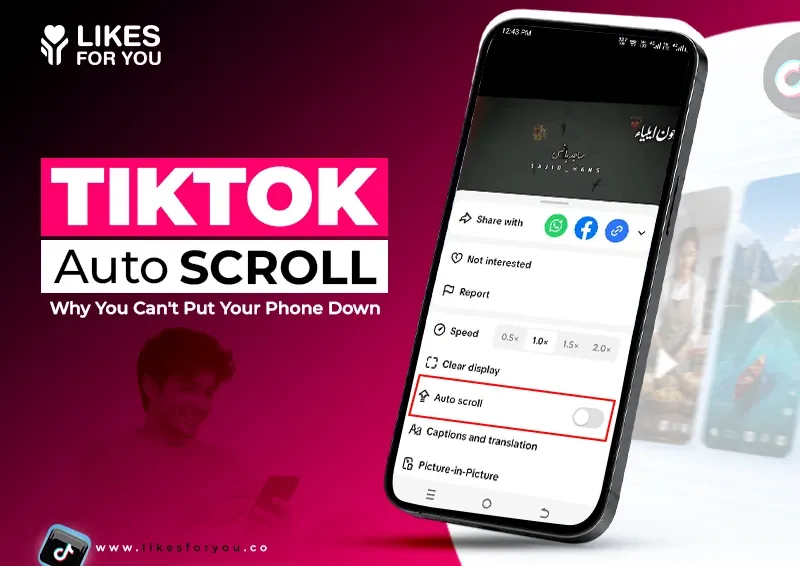
You sat down to watch "just one video." Somehow, ninety minutes disappeared. You have a blanket all...
Want to grow on TikTok but don't know how? LikesForYou will help you to give your TikTok the glow it deserves.


NOW ENJOY DISCOUNT ON EVERY PURCHASE